

Kinds of industrial compost machine
- Small-Scale Industrial Composters – Ideal for restaurants, small farms, and community gardens.
- Medium-Sized Commercial Composting Systems – Designed for hotels, schools, and food processing plants.
- Large-Scale Industrial Composters – Perfect for municipal waste management and agricultural operations.
Looking for an efficient, eco-friendly solution for large-scale organic waste disposal? AUS is a proffesional industrial composting plant Our industrial composters offer high-capacity, rapid composting solutions tailored for businesses, municipalities, and agricultural operations. Designed for efficiency and sustainability, our composting machines convert organic waste into nutrient-rich compost in a matter of days.

INDUSTRIAL COMPOSTER
- COMMERCIAL
AUS-1000 Industrial Composter
- COMMERCIAL
AUS-2000 Industrial Composting Equipment
- COMMERCIAL
AUS-5000 Industrial Scale Composting


Feature of Industrial Compost
✅ High-Speed Composting – Convert waste into compost within 24-48 hours.
✅ Energy-Efficient Operation – Low power consumption for cost savings.
✅ Odor and Pest Control – Advanced air filtration reduces unpleasant smells.
✅ Automated Process – Easy-to-use controls for hassle-free operation.
✅ Customizable Solutions – Scalable options for various industries.
AUS-1000 Industrial Composter
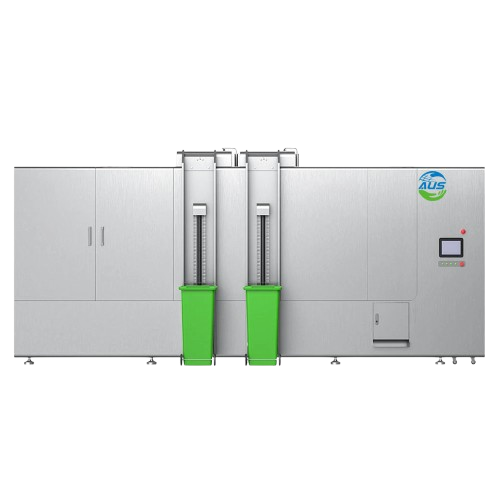
24
Hours
Food waste to compost
90%
Max
Reduction rate
Industrial Application
Industrial composting serves sectors like food processing, agriculture, hospitality, and municipal waste management, converting organic waste into nutrient-rich compost for sustainability.
Hotels and resorts

Fine dining restaurants
Supermarkets industry

Municipal services

Canteen /Cafeterias
Shopping Centres
Food
Processing Sites
Trusted Around The World




FAQ on Industrial Composting
Industrial composting is a large-scale process of breaking down organic waste into compost using controlled conditions. It typically involves higher temperatures, specialized equipment, and optimized processes to accelerate decomposition.
In industrial composting, organic waste is gathered and placed in large, controlled composting facilities. The waste is aerated, heated, and monitored to promote microbial activity that breaks it down into nutrient-rich compost. The process typically involves a combination of aerobic and thermophilic decomposition methods, which help reduce pathogens and contaminants.
- Scale: Home composting is a small-scale, manual process, while industrial composting is a large-scale, mechanized operation.
- Speed: Industrial composting is faster due to controlled conditions like heat and aeration. Home composting takes longer and relies on natural decomposition.
- Materials: Industrial composting can process a wider variety of organic waste, including materials that are difficult to compost at home, like food scraps with meat or dairy.
Yes, industrial composting can be profitable, especially if it is scaled well and optimized for efficiency. Revenue is generated from compost sales, waste disposal fees, and sometimes energy recovery, making it a viable business model in certain markets.
It depends on the context. Industrial composting is better for large quantities of organic waste and offers faster processing. However, home composting is more sustainable on an individual level, requires less infrastructure, and is suitable for smaller amounts of waste. Both methods are beneficial but serve different purposes.